

What is a Number Plate Check?
A number plate check is a digital vehicle verification process that uses a UK registration plate to retrieve key vehicle details, including MOT (Ministry of Transport) history, tax status, fuel type, and CO₂ emissions.
Number plate lookup sources this vehicle data from authoritative data sources, primarily the DVLA (Driver and Vehicle Licensing Agency).
Premium vehicle reports in a number plate check also include VIN (Vehicle Identification Number) and engine data.
A number plate exists as a legal vehicle identifier within the UK transport system, and this vehicle check acts as a lens to interpret that identity.
Advanced number plate check tools, like CarVeto, also return private registration changes for cloning risks, and red flags tied to theft or written-off status.
These insights are derived by cross-checking the VRM (Vehicle Registration Mark) across authoritative national databases.
A DVLA plate check helps ensure that the vehicle's identity aligns with legal records, and the latter section of this report explains how to verify ownership changes and spot forged registrations.
This check also answers common searches like what model is my car, check registration plate, car status check, and check car type.
How Does a Number Plate Lookup Work?
A number plate lookup works by processing a UK vehicle's registration number (VRM) to extract data from authoritative sources like the DVLA (Driver and Vehicle Licensing Agency), MOT (Ministry of Transport) records, and national insurance databases.
This digital search mechanism treats the vehicle's number plate as a key to its identity, which reveals its specs, risks, and registration history in real time.
CarVeto's free number plate check returns basic vehicle data instantly, and you can upgrade to a premium report for a fuller history.
This lookup also answers queries of people who search for car info check, car model check, car details by reg, and DVLA reg lookup.
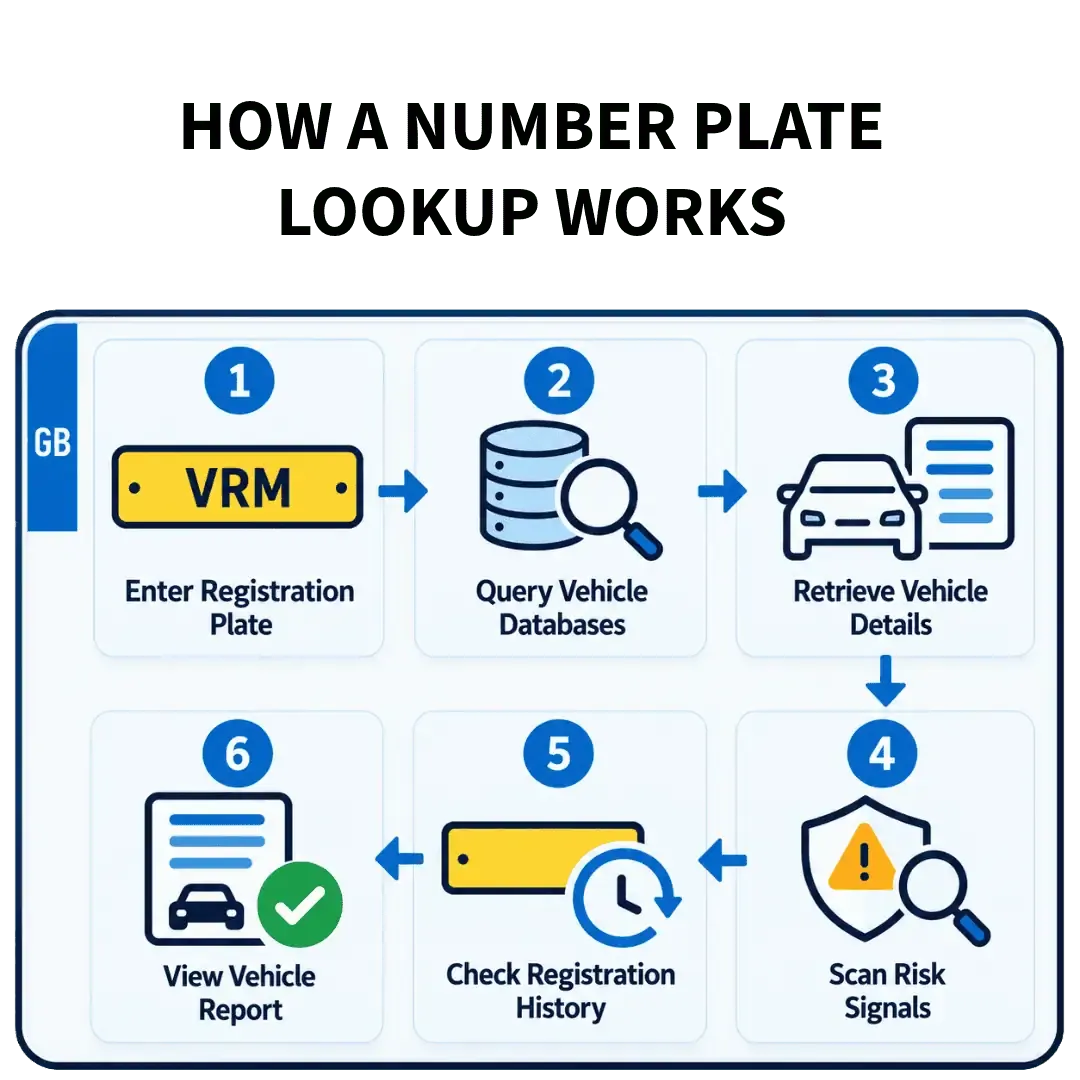
CarVeto's number plate lookup process follows the steps given below.
- Input the Registration Plate (VRM): The user enters the registration plate number into a digital number plate lookup tool.
- Database Query Begins: CarVeto’s data systems connect to the DVLA, MOT, and insurer databases to extract vehicle data in a license tag check.
- Attribute Retrieval: CarVeto’s system gives vehicle specs like make, model, fuel type, engine size, and emissions matched against the vehicle’s number plate in the report.
- Risk Signal Scan: The number plate look-up tool scans the number plate of a vehicle for write-offs, theft records, and cloning risks.
- Ownership Insights: Changes in ownership or alterations to the registration plate get flagged where available, in a license plate check report.
- Report Output: A structured output in a number plate check report shows the verified data tied to the number plate to eliminate the need to access a V5C manually.
CarVeto’s DVLA check allows buyers, sellers, or owners to validate the identity, safety, and technical profile of any UK-registered vehicle, without requiring a V5C or VIN.
See What Users Say About Our Number Plate Check Reports
CarVeto's number plate checks are rated 4.8 out of 5 stars on Google Reviews for their accuracy and ability to detect hidden vehicle risks.
Vehicle buyers in the UK consistently praise how a CarVeto number plate check helps them identify differences between a vehicle's advertised history and its true identity before making a purchase.
Reviewers also mention that the report from our car checker helped them flag outstanding finance, stolen vehicle status, and mileage discrepancies that cannot be identified through a visual inspection alone.
Vehicle buyers say that the VRN check confirmed the vehicle's legal identity against official records, which helped them avoid hidden fraud risks and buy with confidence.
Excellent service, support and advice ... thank you!
Kelley
⭐⭐⭐⭐⭐
I am currently in the process of buying my son his first car. A friend recommended CarVeto and I'm so pleased they did! I purchased their Platinum Certificate and received it straight away. I was unsure about a couple of plate changes so I emailed CarVeto for advice. Michelle was extremely helpful and clear with her explanation.
I have already recommended CarVeto to some friends who are currently looking for first cars for their children.
Will always use these. Incredible.
JP
⭐⭐⭐⭐⭐
Well what a relief we used this service on a van we were looking at purchasing. Too good to be true usually is. Was in this case. This report picked up its mileage had been wound back nearly 100k and there was still outstanding finance on it. Apart from being absolutely gutted about it I’ve been saved from buying a van I thought was perfect and potentially avoided a whole heap of problems.
Thank you CarVeto
What Can You Find From a Number Plate Search?
You can find a complete technical and legal profile of a UK-registered vehicle from a number plate search, including detailed information about a vehicle's identity, specifications, and history, even without access to its V5C document.
This includes real-time insights into MOT status, tax validity, VIN (Vehicle Identification Number) if available, and warning signs of theft or cloning.
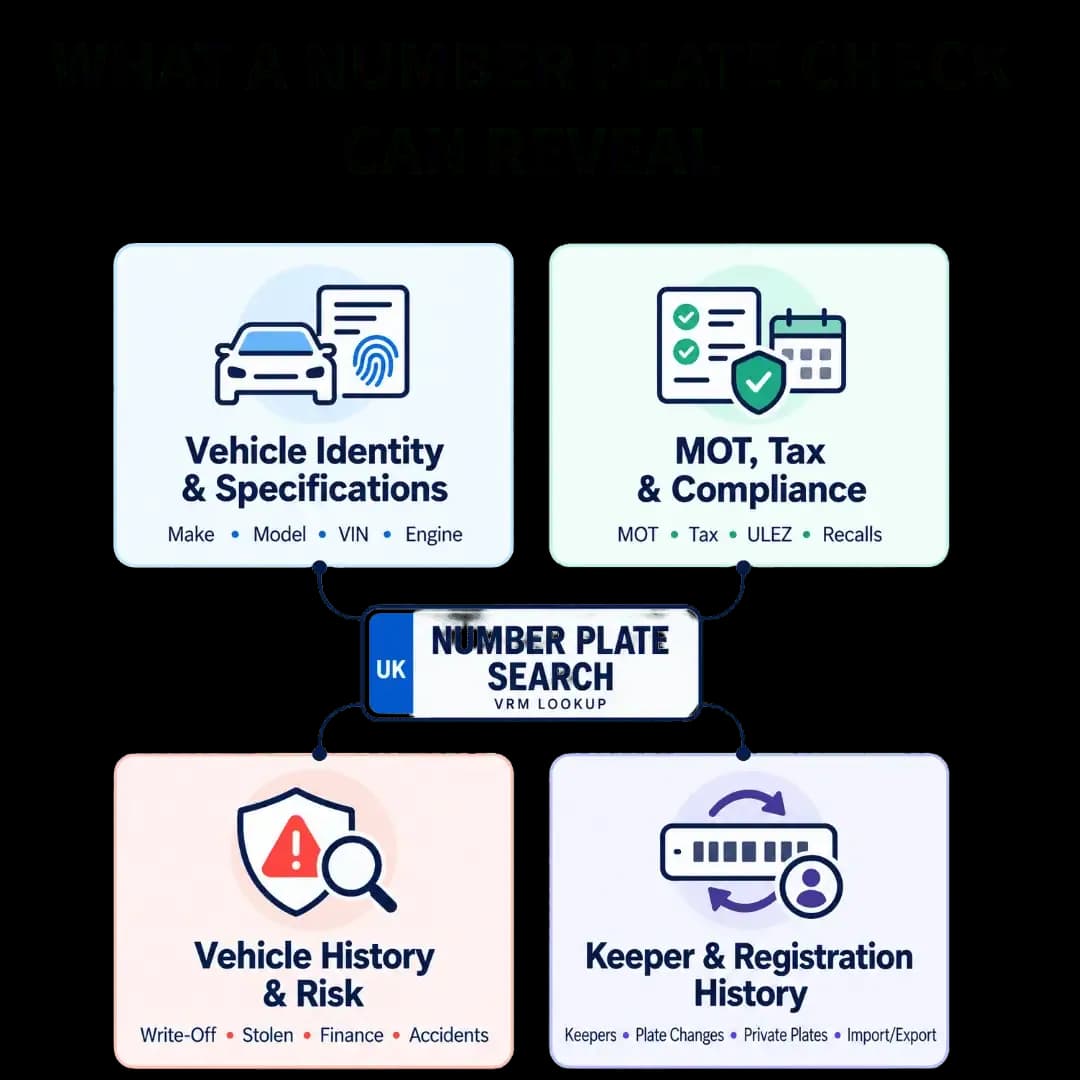
The data points you can find from a number plate search are listed below.
Category | Attributes | Free Check | Premium Report |
|---|---|---|---|
Vehicle Identity | Make or brand, model, year, first registration date, colour | Included | Included |
Technical Details | Engine size, fuel type, CO₂ emissions, transmission, vehicle type | Included | Included |
Vehicle Specification | Engine specification, dimensions, body type | Not included | Included |
MOT Data | MOT expiry, advisories, historical results | Included | Included |
Road Tax Information | Road tax status, renewal date, CO₂-based tax bands | Included | Included |
ULEZ (Ultra Low Emission Zone) Compliance | ULEZ status based on emissions standard | Not included | Included |
Safety & Risk | Write-off status, stolen markers, plate cloning alerts, trade mileage records, accident records | Not included | Included |
Ownership Insights | Number of previous keepers, private plate status, reg changes | Not included | Included |
Outstanding Finance | Finance agreement status, finance company details | Not included | Included |
Insurance Details | Active insurance status through AskMID | Not included | Included |
VIN, Engine Number & Build Data | VIN verification, engine data, Euro standard | Not included | Included |
Vehicle Images | Reference images matched to the vehicle's spec | Not included | Included |
Recalls | Manufacturer safety recall records | Not included | Included |
Import/Export Info | DVLA import or export status | Not included | Included |
Special Markers | Scrapped status, DVLA import check, SORN notice, police interest flag | Not included | Included |
You can use the number plate search to verify whether a vehicle's advertised details match its DVLA records.
This is essential when buying, selling, or validating a private vehicle's background.
CarVeto's Car Import Check can also be used to confirm whether the vehicle you are buying has been registered outside the UK and provides its recorded import history.
Explore deeper ownership trails and accident data through CarVeto's registration check for extended analysis.
When to Use a Car Plate Checker?
You should use a car plate checker when buying or selling a vehicle, verifying a private registration plate, checking whether a vehicle is registered and taxed, investigating a suspicious vehicle, or tracking registration plate changes.
A number plate check verifies the authenticity, history, or legal standing of a vehicle, especially during private transactions.
Number plate checking tools are essential safeguards for buyers, sellers, and current owners alike.
This car plate search is important because misrepresented vehicle listings and hidden risks can result in serious financial or legal consequences within the UK's used car market.
A car plate checker is used on the occasions mentioned below.
- When Buying a Used Vehicle: Run a car plate check when buying a used vehicle to confirm mileage, MOT (Ministry of Transport) status, tax status, ownership history, and whether the vehicle has been reported stolen or written off before purchase.
- When Selling Your Car: Use a number plate check when selling your car to provide prospective buyers with independently verified vehicle information. This helps build trust, justify the asking price, reduce buyer hesitation, and increase the likelihood of a faster sale.
- When Verifying a Private Plate: Run a number plate check to verify a private plate and determine whether the vehicle's private registration has been cloned or reassigned. This is also particularly useful when assessing cherished registrations or custom plates. A number plate checker can be used whether you are trying to find a car via registration plate, search car by number plate, or search plate number.
- When Checking if a Vehicle Is Still Registered or Taxed: Perform a number plate check to verify the registration and tax status of a stored, parked, or recently transferred vehicle.
- When Investigating a Suspicious Car on the Road: Utilise a car plate check when investigating a suspicious car on the road to identify theft markers, expired tax records, and MOT issues linked to a registration.
- When Tracking Registration Changes: Run a personalised number plate check when tracking registration changes to review a vehicle's registration history and identify when and how many times a number plate has changed.
Private registration validation at CarVeto is available through our Private Plate Checker.
What are the Risks Of Buying a Second-Hand Vehicle Without a Number Plate Check?
The risks of buying a second-hand vehicle without a number plate check are vehicle identity issues, outstanding finance, mileage discrepancies, MOT (Ministry of Transport) history concerns, and undisclosed accident damage.
Some other risks of buying a used vehicle include stolen vehicle status, scrapped or exported records, insurance write-off history, registration plate changes, and missing tax or registration status.
A used car can hide all of these issues behind a clean appearance, which makes a number plate check essential before committing to a purchase.
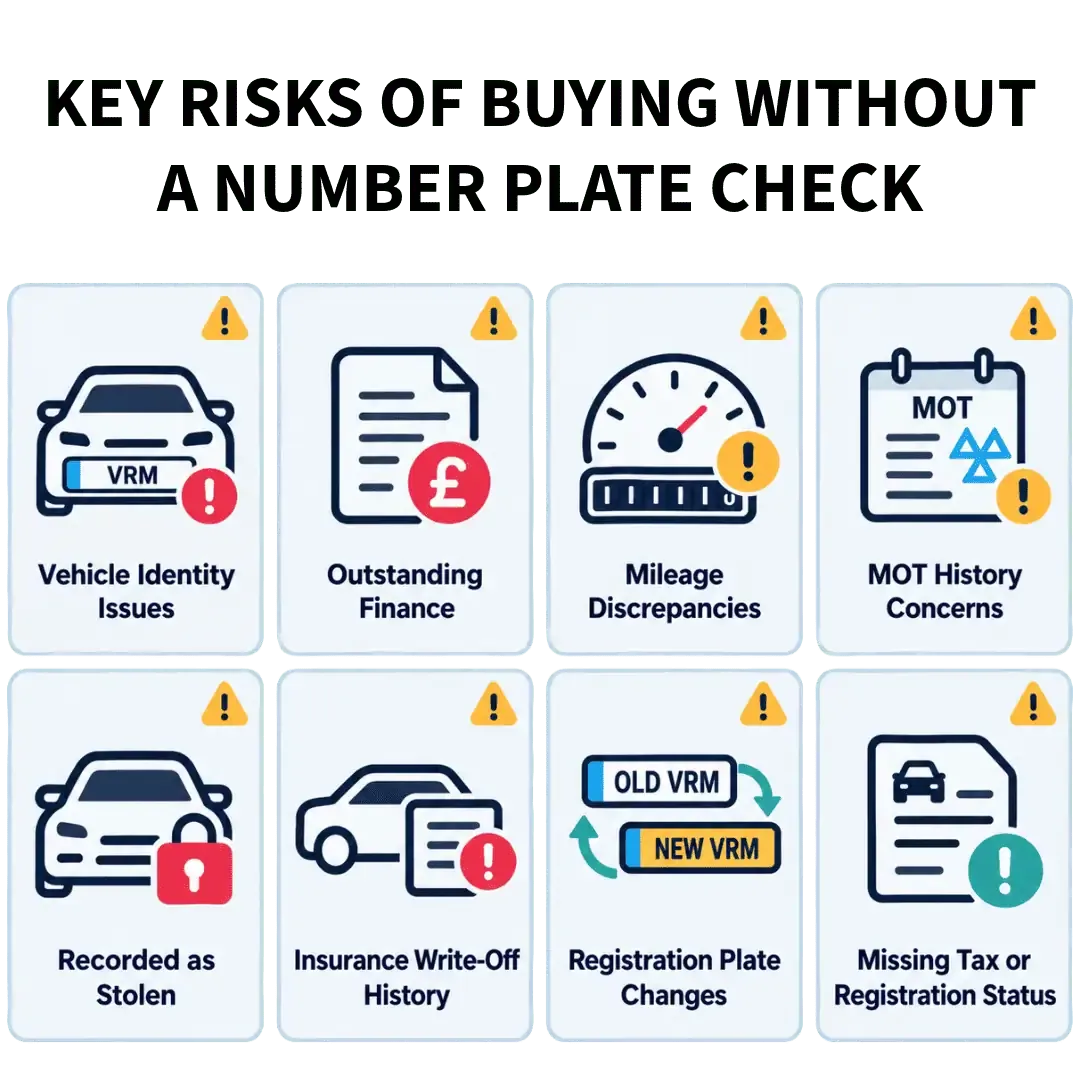
The risks of skipping a registration number plates check before buying a used car are listed below.
- Vehicle Identity Issues: A car purchased without a number plate check could be stolen, previously written off, or linked to a cloned registration, which increases the chances of financial loss and legal complications for the buyer.
- Outstanding Finance: A vehicle bought without a number plate check might have an unpaid finance agreement, which makes buyers liable for the remaining balance after purchase.
- Mileage Discrepancies: A vehicle bought without a number plate check may have an odometer reading that does not match historical MOT records. These mileage discrepancies indicate clocking fraud and significantly inflate a vehicle's value.
- MOT History Concerns: A second-hand vehicle purchased without a number plate check may have a history of repeated MOT failures or unresolved advisories. These hidden defects lead to unexpected repair costs and safety concerns.
- Ownership History Concerns: Skipping a number plate check leaves a vehicle's ownership history unknown. A high number of previous keepers within a short period indicates recurring faults or other underlying issues.
- Undisclosed Accident Damage: A vehicle bought without a number plate check may have a history of accident damage that is not obvious during a visual inspection. This affects a vehicle’s structural integrity, safety, and resale value.
- Recorded as Stolen: A second-hand vehicle purchased without a British number plate check may be listed on theft databases. This can cause the police to seize the stolen vehicle even if it was bought in good faith, leaving the buyer at a loss.
- Colour or Specification Mismatches: Buying a vehicle without a number plate check increases the risk of purchasing a car whose colour, specification, or identity details do not match official records. Such discrepancies indicate cloning, registration fraud, or an incorrect vehicle identity.
- Scrapped or Exported Vehicle Records: A vehicle bought without a UK car licence plate check may already be recorded as scrapped or exported. These records affect the legality, registration status, and road use eligibility of a vehicle.
- Insurance Write-Off History: A second-hand vehicle purchased without a number plate check may have been declared an insurance write-off. Previous write-off status reduces the resale value and raises concerns about the repair quality and safety of a vehicle.
- Registration Plate Changes: Purchasing a vehicle without a number plate check may result in buying a vehicle with a history of multiple registration plate changes. These frequent number plate changes conceal parts of a vehicle's history and indicate attempts to hide previous records or identity-related concerns.
- Missing Tax or Registration Status: A vehicle bought without a car licence plate lookup may have an invalid tax or registration status. This leads the buyers to face delays, additional costs, and legal restrictions before the vehicle can be used on public roads.
Frequently Asked Questions (FAQ)
A private number plate check verifies whether a personalised or cherished registration has been assigned, transferred, cloned, or placed on retention.
Private plate lookups, unlike standard plate checks, require validation of ownership records, change history, and DVLA assignment data.
Yes, you can check a private number plate through CarVeto's personalised number plate check.
These checks are handy when assessing the authenticity of unique or valuable registrations.
Private number plate checks help detect fraud signs, such as cloned plates used on stolen vehicles or improper transfers.
CarVeto provides a private number plate check guide to help you understand private registration records, in-depth reporting, and common use cases.
Number plate check data is highly accurate because CarVeto uses nightly, weekly and monthly updated data from official sources, including DVLA records, MOT services, and insurance databases.
This direct connection to official UK databases removes the delays and errors common in third-party or unofficial check tools.
A number plate check report depends on the source databases reporting events promptly, so a very recent change, such as a write-off recorded hours earlier, may not yet appear.
Yes, it is legal to perform a number plate check because our number plate checks comply with DVLA regulations and data privacy laws and offer vehicle data without exposing private owner information.
This data boundary keeps every check fully GDPR (General Data Protection Regulation) compliant.
No, running a number plate check does not affect the vehicle's record because the search process works anonymously.
CarVeto's license plate checker provides verified data without registering the search against the vehicle's file.
This means that the registered keeper receives no notification, and the vehicle's record remains unchanged regardless of how many times you check it.
UK vehicle buyers can run an unlimited number of plate checks on the same vehicle without risk, whether you're comparing listings or revisiting a check before completing a purchase.
A number plate lookup reveals MOT history, mileage trends, vehicle make, model, colour, age, engine size, VIN where available, plate change records, write-off status, tax class, and ownership history.
This vehicle ID check does not reveal the registered keeper's name, address, or any other personal identifying information.
Yes, you can check MOT history by reg of a vehicle through CarVeto's a car lookup by plate tool.
This reg check returns MOT expiry dates, pass and fail results, advisory notes, and mileage recorded at each test.
Yes, a number plate check can highlight cloned or fake plates by comparing the vehicle's registration against the VIN, engine number and official records.
Cloning of a vehicle in a number plate check is flagged via VIN mismatches, unusual ownership patterns, or inconsistent MOT and tax records.
Running a registration verification before purchase confirms whether the physical vehicle matches its recorded specifications to protect vehicle buyers from buying a cloned or stolen car.
No, you cannot find the owner of a car from its registration number because UK data laws classify the registered keeper's name or address as personal identifying information protected under GDPR.
A license plate check includes ownership history, which shows the number of previous keepers and the dates ownership changed hands.
You can obtain registered keeper details for legitimate reasons, such as reporting an accident or pursuing a parking dispute, by applying directly to the DVLA using the V888 form.
You can see CarVeto's guide to Car Owners by Registration for more information on when registered keeper details can be requested and the legal process involved.
A plate change on a number plate report means the vehicle's registration was swapped at some point, through a personalised plate assignment, transfer, or retention.
This change gets logged against the vehicle's DVLA record, and a number plate report displays the date and nature of each change.
A normal plate change involves a private registration applied to a vehicle by its legitimate owner, or a plate returned to retention before being reassigned elsewhere.
A harmless example of a number plate check is an owner moving a plate from an old car onto a newly purchased one through standard DVLA transfer.
A suspicious change, by contrast, involves a plate swapped immediately before a sale with no matching retention record, or multiple plate changes within a short period that do not align with any registered transfer.
Analysing the full timeline of plate changes against MOT and ownership dates helps you spot whether a change followed the normal process or points to an attempt to obscure the vehicle's true history.
Yes, you can check a number plate by VIN if it is linked to official DVLA records.
VRM-to-VIN lookups are used for reverse lookups, matching the VIN against the vehicle's current registration to verify its identity or detect plate cloning.
The check is not possible if the vehicle's VIN does not appear in DVLA or DVSA records, which can happen with grey imports or vehicles registered before VIN data became standard.
Yes, you can find a VIN from a registration number through CarVeto's VIN Check, which matches the entered registration to the linked VIN.
This process for finding a VIN from a registration plate works in reverse of a standard VIN check tool, because it starts with a number plate.
No, a number plate check does not work for trade plates because these are temporary red and white registrations issued to motor traders.
These number plates allow them to move unregistered or untaxed vehicles on public roads for testing, delivery, or demonstration purposes.
A registration plate check run against a trade plate returns no meaningful vehicle history, because traders reuse the same plate across multiple vehicles, leaving it with no fixed link to one VIN or registration record.