MOT Check: Instantly View Your Vehicle’s MOT Status & Expiry Date
See if your vehicle has a valid MOT, when it expires, and whether it’s legal to drive.
CarVeto checks real-time DVSA records to confirm your MOT status instantly, for driving, taxing, maintaining or selling.
Enter your number plate to run a free MOT check now.

Check the MOT Status of a Vehicle
An MOT status check shows if a car has a valid certificate, when it expires, and whether it's legal to drive.
The result will show one of three states: valid, expired, or no MOT record found.
If your MOT is valid, the vehicle has passed its latest test and remains roadworthy until the expiry date.
If it's expired, driving is illegal except for a pre-booked MOT test.
A no-record result usually means the car is either too new, registered in Northern Ireland, or recently had its number plate changed.
MOT status affects your ability to legally drive, tax, sell, or insure a car.
Without a valid MOT, your insurance may be void, and ANPR cameras can trigger fines of up to £1,000.
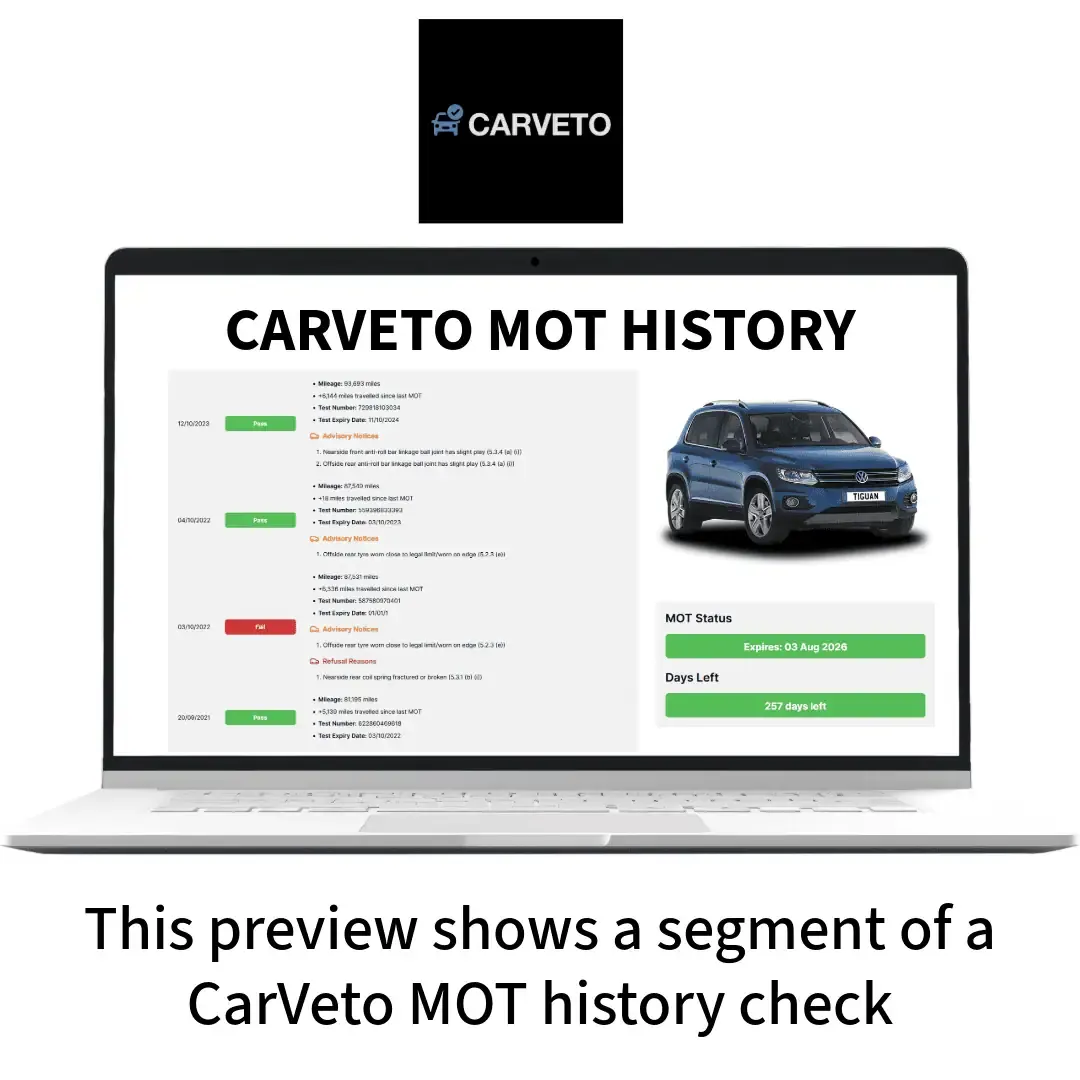
CarVeto retrieves live MOT status directly from DVSA records — the UK’s official MOT authority.
In rare cases, no result may appear due to:
- A new vehicle not yet due its first MOT
- An NI registration not listed in the GB system
- A recent plate change or private registration
- A test that hasn’t yet updated in DVSA records
These checks follow the vehicle’s VIN and number plate.
If no status appears, check the details entered or wait for the system to update.
Understanding MOT status helps everyday drivers stay legal, insured and safe on the road.

How to Check a Car’s MOT Status Online
To check your car’s MOT status online, enter its number plate to see whether the MOT is valid, expired, or not yet required.
CarVeto uses real-time DVSA data, the same records used by police and insurers.
Follow these steps:
- Enter your registration number (VRM) exactly as shown on your number plate: spacing and character accuracy matter.
- Confirm the vehicle make and model shown in the results. If it’s incorrect, double-check the plate entry.
- View the MOT status result. You’ll see whether the test is valid, expired or not required, along with the exact expiry date.
- Understand “No MOT required.” If your car is under three years old, it won’t need an MOT yet, and this message will appear.
- Know the rules for expired MOTs. You can only drive to a pre-booked MOT if your test has expired. Otherwise, the car is not road legal.
- SORN doesn’t remove the MOT requirement. Once you bring a SORN vehicle back on the road, it must have a valid MOT.
- Allow for plate change mismatches. If you’ve recently swapped number plates, the DVSA record may take time to reflect the update.
- Imported or Northern Ireland vehicles might not appear immediately. These may need a VIN-level match for accuracy.
CarVeto shows exactly what DVSA records contain, with expiry data, road legality, and status all in one place.
When is My MOT Due? Check our quick guide to MOT test renewals.
Where MOT Status Information Comes From
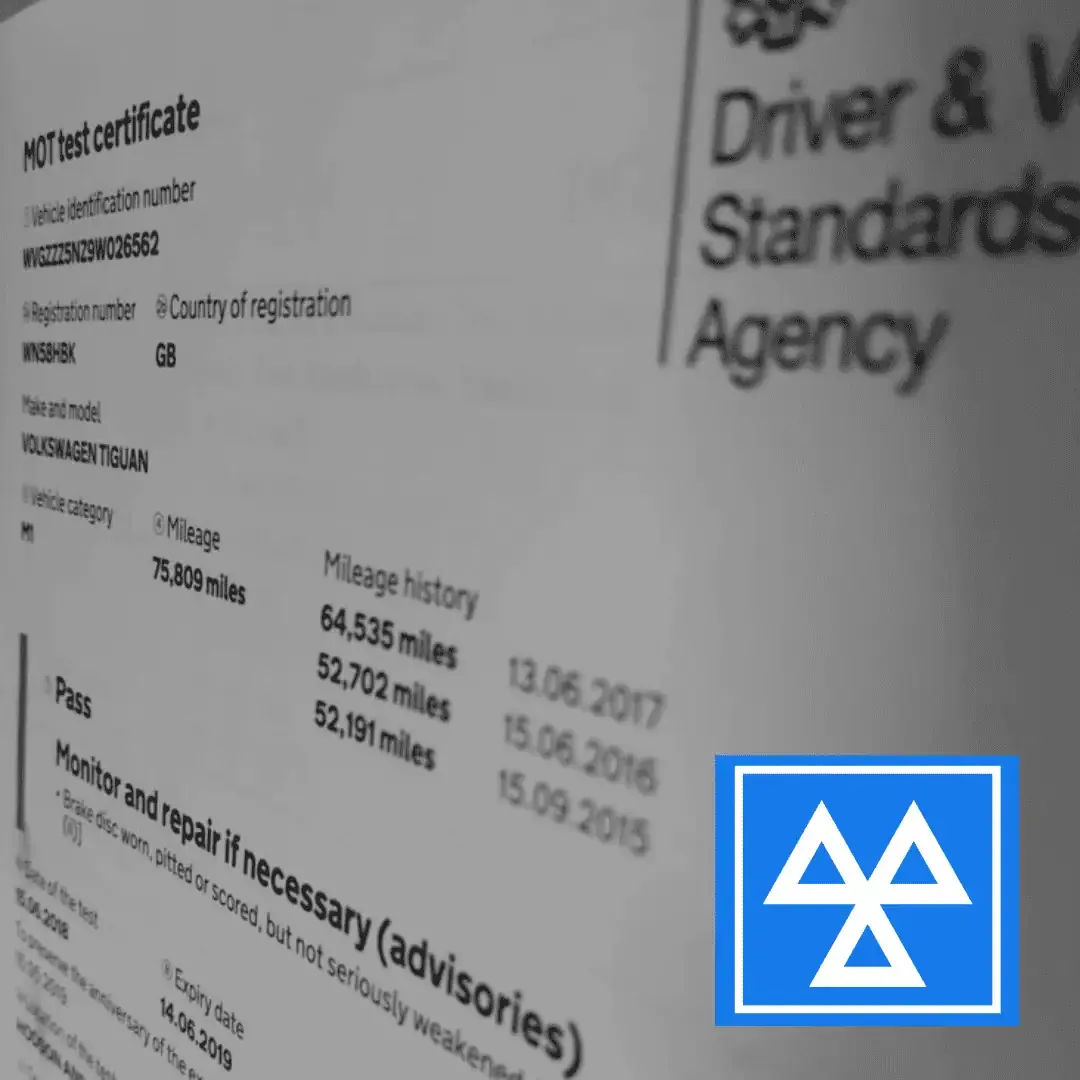
MOT status comes from the DVSA (Driver and Vehicle Standards Agency), the government body that records every MOT test result.
When a garage completes an MOT, they submit the result directly to the DVSA system.
This creates an official, timestamped record that includes the pass/fail result, expiry date, and test date.
CarVeto reads this record in real time to show your MOT status exactly as DVSA holds it.
This system ensures motorists have accurate, trustworthy information about their vehicle’s roadworthiness.
Plate & VIN Considerations for Accurate MOT Status
Although you check the MOT using your registration number, the official MOT record is tied to the VIN (Vehicle Identification Number), a fixed vehicle identity that remains the same even when plates change.
Private plate changes can occasionally confuse.
If your MOT result looks outdated or missing, it’s often due to a recent registration switch.
DVSA records will usually update automatically once the change is processed.
Your current plate remains valid for checking MOT status, since it always resolves to the correct VIN.
For extra certainty after a plate change, use our VIN Decoder to confirm the vehicle’s true MOT identity.
When Is My MOT Due or Expiring?
An MOT is due on the expiry date of the current certificate, the last day the car is legally roadworthy.
This date appears in your CarVeto MOT check result and shows exactly when your vehicle must be retested.
MOT certificates are valid for 12 months from the most recent test pass.
Once that date is reached, the MOT expires at midnight, and the car becomes illegal to drive unless you’re travelling to a pre-booked MOT appointment.
You’re allowed to renew your MOT up to 1 month (minus a day) early without losing days on the new certificate.
For example, if your expiry is 20 June, you can take the test on 21 May and still retain 20 June as next year’s renewal date.
Renewing early gives you flexibility and helps avoid gaps in legality or insurance coverage.
Understanding your due date helps avoid last-minute problems during busier seasons when test centres are harder to book.
It also reduces the risk of missing your MOT and triggering fines or invalid insurance.
The MOT record always follows the vehicle’s VIN, not just the registration number.
If dates seem out of sync, compare them with your physical certificate or contact the MOT station.
Driving without a valid MOT risks fines up to £1,000 and may invalidate your insurance.
If your test is due soon, use our Online MOT Booking, especially if you use your car daily for commuting or local trips.
Check MOT and Tax Status Together
You need a valid MOT to tax your vehicle, but being taxed doesn’t mean the MOT is still valid.
This often catches drivers out.
When you tax your car, the DVLA system checks the DVSA database for a valid MOT.
If there isn’t one, the tax application will be blocked.
But once a car is taxed, it stays taxed even if the MOT later expires, meaning the car can appear legal while being unroadworthy and uninsured.
That’s why you should always check both MOT and tax together.
This matters most when:
- Buying a used car (the tax and MOT might not match)
- Returning a vehicle from SORN (MOT comes first)
- Driving a car already taxed but unknowingly out of MOT
For example, a car might be taxed by a previous owner, but if the MOT expired yesterday, it’s not legal to drive today.
Tax alone is not proof the car is roadworthy.
In Northern Ireland, MOT and tax are handled through different systems.
MOT results may not appear until the car is tested in the DVSA (GB) system or officially re-registered.
To check both at once, use a Government Vehicle Check.
It shows MOT status and tax status side-by-side from trusted government records.
Understanding how these two checks work together helps you stay legal, avoid fines, and keep your insurance valid.
What an MOT Test Checks and Who Needs One
An MOT test confirms that your car meets the minimum safety and environmental standards set by the DVSA.
It’s a legal requirement, designed to ensure your vehicle is roadworthy, but it’s not the same as a service or mechanical check-up.
Each MOT follows a standardised checklist used by authorised testing stations across the UK.
It focuses only on road safety and emissions, not maintenance, performance, or wear-and-tear.
Here’s what’s covered during the test:
- Brakes and Steering
Tests brake pads, discs, handbrake, ABS warning lights, steering racks, and hydraulic lines, ensuring the car can stop and turn safely. - Lights and Visibility
Includes all exterior lights (headlights, brake lights, indicators), plus wipers, washers, windscreen condition, mirrors and number plate lights. - Tyres and Wheels
Ensures minimum tread depth (1.6mm), no sidewall damage or bulges, and road-legal tyre types. Wheels must be securely attached and undamaged. - Structure and Bodywork
The test checks for excessive rust, corrosion or damage to the chassis, doors, sills and key load-bearing parts, especially near suspension or braking points. - Exhaust and Emissions
Emission levels must meet legal limits. The test also inspects the exhaust system for leaks, secure fittings and condition.
An MOT does not include checks on oil levels, engine condition, timing belts or general service items. These fall under routine servicing.
Many drivers assume that an MOT confirms a vehicle's health, but it only verifies compliance with road safety laws.
Who Needs an MOT?
If your car is more than three years old, it must have a valid MOT to be used on public roads.
The first test is due on the third anniversary of its registration, and then every 12 months.
Some exceptions apply:
- Classic cars over 40 years old may be exempt if they haven’t been significantly modified and aren’t used for commercial purposes.
- Electric vehicles follow the same MOT rules as petrol or diesel cars.
- Some vehicle classes (e.g. large vans or minibuses) may have different test intervals, but most private cars require annual MOTs.
To see everything your car will be tested on, visit the MOT Test Checklist.
Keeping your MOT up to date ensures legal compliance, safer driving, and peace of mind that your vehicle meets national standards.
What to Do After Checking MOT Status
After checking your MOT status, your next step depends on whether the test is valid, due soon, expired, or missing.
Each state has legal and practical implications, especially for insurance and roadside enforcement.
✅ If the MOT Is Valid
You can legally drive, insure, tax, or sell the vehicle.
No further action is required today, but make a note of the expiry date and set a reminder as it approaches.
⚠️ If the MOT Is Close to Expiry
When your MOT expires within 30 days, it’s time to book a test.
You’re allowed to retest up to one month minus a day early without losing your renewal date.
Early testing helps avoid legal gaps, insurance issues, or unplanned garage delays.
❌ If the MOT Has Expired
The car is no longer road legal.
You may only drive it to a pre-booked MOT appointment.
Automatic Number Plate Recognition (ANPR) systems and police checks can detect an expired MOT and trigger fines up to £1,000.
Driving uninsured, a likely result if your MOT is invalid, risks even more serious penalties.
The correct action is to book an MOT immediately and avoid driving until it passes with clean history.
A record of MOT History can be found in open-source databases such as CarVeto and GOV.UK.
🕵️ If No MOT Record Is Found
This often points to one of the following:
- A new vehicle not yet due its first MOT
- A recent plate change or private reg not fully synced with DVSA
- A Northern Ireland vehicle not listed in the GB database
- A mistyped registration number
Double-check your entry, wait if the change was recent, or confirm using the VIN.
If you’re reviewing a car before buying, you may also want to run a complete Vehicle Registration Verification to see its MOT history, mileage, and ownership details.
Frequently Asked Questions about MOT Status
An MOT status check shows whether a vehicle has a valid MOT and when it expires. It confirms if the car is legally roadworthy.
You can check your MOT status by entering your registration number into a trusted online tool that uses DVSA data.
You can find your MOT due date in the MOT record. New cars don’t require an MOT until they are three years old. Read our guide for What Year is My Car?
Your MOT status may not show due to a recent test, private plate change, Northern Ireland registration, or if the vehicle is brand new.
No. Driving with an expired MOT is illegal and can lead to fines, invalid insurance, and ANPR penalties.
Run an MID Check to verify live vehicle status.
Yes. You need a valid MOT to tax your vehicle, but being taxed does not mean your MOT is still valid.
No. New cars don’t need an MOT until the third anniversary of their registration date.
Yes. Checking MOT status using a VIN is helpful if the vehicle has recently changed number plates.
Your MOT expiry date may appear incorrect due to an input error at the test centre or a recent plate change that hasn't yet been updated in DVSA records.
Yes. MOT status checks are always free for motorists using authorised tools.
Explore More MOT Check Topics
For deeper MOT guidance, use these dedicated CarVeto resources.
Each one explains a different part of the MOT process, from due dates and exemption rules to test failures, DVLA mileage, and advisory notices, all tailored for private motorists.