
Stolen Car Check: Verify Police and Insurance Theft Records by Reg
A stolen vehicle check searches UK police and insurance theft records using the vehicle registration number (VRM).
Enter the registration number below to check if a car is recorded as stolen before buying or selling.

What is a Stolen Car Check?
A stolen car check confirms whether a vehicle is recorded as stolen in police or insurance theft records and verifies the vehicle’s identity.
When a vehicle theft is reported, a theft marker is recorded in law-enforcement systems and insurance claim databases used to track stolen vehicles.
These theft markers are linked to the vehicle’s registration number (VRM) and Vehicle Identification Number (VIN), which uniquely identify the vehicle in official records.
A stolen car check focuses specifically on verifying theft status and vehicle identity.
Mechanical condition, servicing history, and performance details are covered in a full Car History Check, which provides broader information about the vehicle.
Checking the theft status helps buyers avoid purchasing a vehicle that could later be recovered and returned to the legal owner or their insurer.
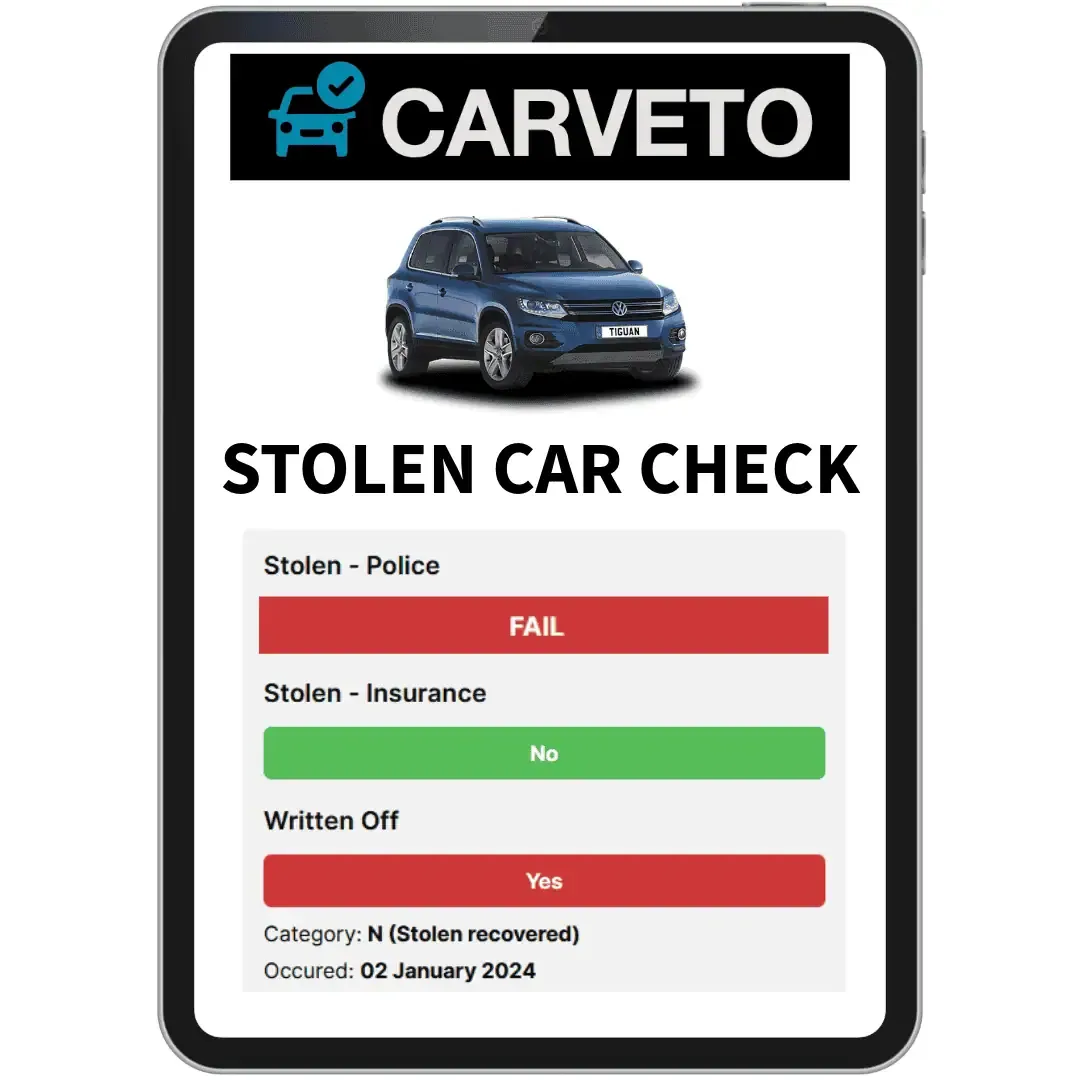
How to Check if a Car Is Stolen in the UK
A car’s stolen status is confirmed by searching police and insurance theft records using the vehicle registration number (VRM) and verifying the vehicle identity with the Vehicle Identification Number (VIN).
A stolen car check follows a simple verification process that confirms the vehicle identity and searches theft records linked to the registration.
Collect the vehicle identifiers
Start by confirming the vehicle’s registration number (number plate) and, where possible, the Vehicle Identification Number (VIN).
The registration number links the vehicle to official registration records, while the VIN confirms the vehicle’s permanent identity.
Using both identifiers ensures the vehicle being checked matches the vehicle being sold.
Run a stolen car check using the registration number
Enter the registration number to search theft markers linked to police and insurance databases.
This search reveals whether the vehicle appears in national theft records.
Confirm the vehicle identity
If the check provides vehicle identity details, confirm that the registration number and VIN correspond to the same vehicle.
A mismatch may indicate vehicle cloning or identity fraud and should be investigated before proceeding.
Review the theft status before continuing
If no theft markers are recorded, the vehicle does not appear in theft databases at the time the check is performed.
If a theft marker is present, the vehicle may belong to the original owner or their insurer and cannot legally be transferred to a new buyer.
Checking stolen status early is one of the key Checks Before Buying a Used Car, helping reduce the risk of committing to a vehicle that cannot legally be owned or retained.
Running a stolen vehicle check takes only seconds and confirms whether the vehicle appears in police or insurance theft records at the time of the search.
Verifying the theft status before viewing or paying for a vehicle reduces the risk of financial loss and helps ensure the vehicle can be legally owned and transferred.
What Does a Stolen Car Check Include?
A stolen car check verifies whether a vehicle appears in police or insurance theft records and confirms that the vehicle identity matches official registration data.
The check focuses on theft status and vehicle identity.
The main theft-verification data points are summarised below.
Data Point | What it Confirms |
|---|---|
Theft markers | Whether the vehicle is recorded as stolen |
Police alerts | Links to police-reported theft records |
Insurance theft records | Theft claims recorded by insurers |
Registration verification | That the registration number matches the vehicle record |
VIN confirmation | That the vehicle identity matches the official vehicle record |
Together, these checks confirm whether the vehicle appears in theft records and whether the registration and VIN match the same vehicle.
Theft markers
The check confirms whether the vehicle is recorded as stolen.
A theft marker appears when theft is reported to police or recorded in insurance claim systems.
Police-related alerts
Police alerts indicate that the vehicle has been reported stolen through law-enforcement systems such as the Police National Computer (PNC).
Insurance theft records
Insurance theft records are created when a stolen vehicle claim is reported and processed by an insurer.
If the claim is paid, legal ownership may transfer to the insurer.
Registration number verification
The check confirms that the registration number (VRM) matches the correct vehicle record.
This confirms the number plate is linked to the correct vehicle identity.
Vehicle identity confirmation
Vehicle identity can be verified using a VIN Identity Verification Check.
The VIN is the permanent identifier assigned by the manufacturer and used across registration and insurance systems.
Matching the VIN with the registration confirms the vehicle identity and helps detect cloning.
Where Stolen Vehicle Data Comes From?
Police and insurers record stolen vehicles by creating official theft records when a vehicle is reported stolen or when an insurer processes a theft claim.
These records are shared across authorised systems used to verify vehicle history.
UK Stolen Car Databases
Several national databases are used to record and track stolen vehicles in the UK.
The primary law-enforcement system is the Police National Computer (PNC), which stores records of vehicles reported stolen to police forces across the country.
Insurance theft claims are also recorded through industry systems used by insurers and organisations such as the Motor Insurers' Bureau (MIB).
These records track vehicles involved in theft claims and insurance payouts.
Vehicle history check services compare vehicle identifiers such as the registration number (VRM) and Vehicle Identification Number (VIN) against these systems to confirm whether a vehicle has been reported stolen or linked to an insurance theft claim.
Police theft records
When a vehicle is reported stolen, police create a theft record in national law-enforcement systems, linking the report to the vehicle’s registration number and identity.
The report is stored in systems such as the Police National Computer (PNC), where it remains active until the vehicle is recovered or the status is updated.
Insurance theft records
Insurance companies also record theft claims when a policyholder reports a stolen vehicle.
If the claim is paid, legal ownership may transfer to the insurer.
These records are managed through systems operated by organisations such as the Motor Insurers' Bureau (MIB) and used to verify theft claims and insurance payouts.
Cross-referencing theft records
Premium vehicle check services confirm stolen status by cross-referencing police reports, insurance claim records, and vehicle identity systems.
Using multiple sources ensures the theft status linked to the vehicle’s VRM and VIN reflects the most accurate available records.
Check if a Car Is Stolen by Number Plate or VIN
A stolen vehicle check normally begins with the registration number and can then be verified using the VIN to confirm the vehicle’s identity.
Number plate (registration number) checks
A stolen car check uses the registration number (VRM) to search for theft records linked to that vehicle record.
If the car has been reported stolen, a theft marker may appear against the registration.
Because number plates can be copied or cloned, a registration check alone does not prove the vehicle’s true identity.
VIN verification
The Vehicle Identification Number (VIN) is the vehicle’s permanent identifier.
Checking the VIN confirms that the registration belongs to the same vehicle recorded in official systems.
A mismatch between the VIN and registration may indicate cloning or identity fraud and should be investigated before purchase.
A dedicated VIN Identity Verification Check helps confirm that the vehicle being inspected matches the identity held in national databases.
Why both identifiers are used together
Using both together reduces the risk of relying on a cloned or misrepresented registration and helps confirm that the theft status applies to the vehicle being inspected.
What Happens if You Buy a Stolen Car?
If you buy a stolen car, you may lose the vehicle without compensation because legal ownership remains with the original owner or their insurer.
Police can recover the vehicle and return it to the lawful owner or insurer even if the buyer purchased it in good faith.
Vehicle recovery by police
When a stolen vehicle is identified through police records or vehicle verification systems, authorities may recover the vehicle as part of a theft investigation.
Once the theft status is confirmed, the vehicle can be seized and returned to the lawful owner or the insurer that settled the theft claim.
Financial loss for the buyer
Buying a stolen car can result in financial loss if the seller cannot be traced or refuses to refund the purchase.
Because stolen vehicles cannot legally be transferred to a new owner, insurance policies and finance agreements may also be invalid once the theft status becomes known.
This means the buyer may lose both:
- the vehicle itself
- the money paid to purchase it
Legal and ownership complications
A stolen vehicle may create legal complications while ownership is investigated and confirmed.
During this process, the buyer cannot legally register, insure, or transfer the vehicle.
These complications often arise after the purchase has already taken place, which is why stolen status must be verified before committing to buy.
Why stolen status must be verified before buying
A stolen car check confirms whether the vehicle appears in theft records before money changes hands.
Checking theft records before purchase helps ensure the vehicle can be legally owned and retained.
How to Avoid Buying a Stolen Car?
The risk of buying a stolen car can be reduced by verifying theft status early, confirming the vehicle’s identity, and completing key ownership checks before committing to purchase.
Run a stolen car check before viewing or paying
The most effective protection is to verify the vehicle’s theft status before arranging a viewing or making any payment.
Running a stolen car check early confirms whether the vehicle appears in theft records.
Verify both the registration number and VIN
Confirming the vehicle’s registration number (VRM) and Vehicle Identification Number (VIN) helps ensure the vehicle being inspected matches the identity recorded in official databases.
Matching these identifiers helps confirm:
- the registration belongs to the correct vehicle
- the VIN corresponds to the same vehicle identity
- the theft status applies to the vehicle being inspected
This step helps detect cloning or identity misrepresentation.
Check ownership and finance records together
A stolen car check should be considered alongside other ownership-related records.
For example, an Outstanding Finance Check can confirm whether the vehicle has finance attached that may affect ownership rights.
Combining theft checks with finance, write-off, and identity verification checks provides a clearer picture of whether the vehicle can legally be owned and transferred.
Inspect the vehicle documents and identifiers
When viewing the vehicle in person, confirm that the V5C logbook, registration number, and VIN displayed on the vehicle match the information returned by the vehicle history check.
Inconsistent or missing documentation may indicate the vehicle identity does not match official records.
Complete all checks before committing to purchase
Verification should always be completed before money changes hands.
Once payment has been made, recovering funds can be difficult if the vehicle later appears in theft records or cannot legally be transferred to the buyer.
Completing identity, theft, and ownership checks in advance helps ensure the vehicle can be legally owned, registered, and retained after purchase.
How to Spot Signs a Car May Be Stolen
Although a stolen vehicle check provides the most reliable confirmation of theft status, certain warning signs may indicate that a car could be stolen or misrepresented.
Common indicators include:
Missing or inconsistent documentation
The seller may be unable to provide the V5C logbook or the details on the document may not match the vehicle.
VIN numbers that appear altered or mismatched
The Vehicle Identification Number must match the VIN shown on the vehicle, the registration record, and the vehicle history check. Differences may indicate cloning or identity fraud.
A price significantly below market value
Vehicles advertised far below their typical market price may warrant additional checks before purchase.
Pressure to complete the sale quickly
Sellers who discourage verification checks or push for immediate payment may be attempting to avoid scrutiny.
Because visual indicators alone cannot confirm whether a car is stolen, a stolen vehicle check should always be completed before committing to purchase.
Is There a Free Stolen Car Check, and What Does It Miss?
Some services provide a free stolen car check, but these checks usually rely on limited datasets and simplified verification methods.
Most free checks confirm basic vehicle information linked to the registration number, such as vehicle details, MOT status, and tax records.
Some may also indicate whether the vehicle appears in police theft records.
However, free checks often rely on a limited search of databases such as the Police National Computer (PNC) and may not include deeper verification across insurance theft claims or identity records.
What a free stolen car check usually shows
A free stolen car check typically provides basic information linked to the vehicle’s registration number, including:
- vehicle make, model, and registration details
- MOT status and MOT history
- road tax status and expiry date
- limited theft markers linked to public data sources
These checks can help confirm that the registration exists and that the vehicle details appear consistent with official records.
What free stolen car checks often miss
Free checks are limited because they do not always access the full range of databases used in vehicle verification.
Information that may be excluded includes:
- insurance theft claim records
- theft markers linked to insurer payout data
- VIN-based identity verification
- cross-referencing between police and insurance systems
Because stolen vehicle records originate from multiple sources, a free check may not always provide a complete picture of the vehicle’s theft status.
Why a full vehicle history check provides more certainty
A full CarVeto Car Check verifies stolen status by cross-referencing multiple authorised data sources, including police records, insurance databases, and vehicle identity systems.
This broader verification helps confirm whether the vehicle has been:
- reported stolen
- linked to an insurance theft claim
- recorded as recovered or written off or salvaged after theft
Because theft records can change over time, a comprehensive check provides the most reliable confirmation of a vehicle’s status at the time the report is generated.
What Should You Do if You Think a Car Is Stolen?
If you suspect a car may be stolen, stop the transaction and do not proceed with payment or ownership until the vehicle’s status has been verified.
Handling the situation cautiously helps prevent financial loss and ensures the issue can be addressed through the appropriate authorities.
Stop the transaction
Do not continue with the purchase if the vehicle shows inconsistent records, missing documentation, or theft alerts.
Completing a transaction before verifying the vehicle’s status increases the risk of losing both the vehicle and the money used to buy it.
Avoid confronting the seller
If a vehicle is suspected to be stolen, avoid confronting the seller directly.
Handling the situation through the appropriate authorities helps protect personal safety and ensures that any investigation can proceed correctly.
Contact the police
If you believe a vehicle may be stolen, contact the police using the non-emergency number 101 in the UK.
Provide any available vehicle information, including:
- the vehicle registration number (VRM)
- the make and model
- the vehicle colour
- the location where the vehicle was seen
Police can confirm whether the vehicle appears in stolen vehicle records and advise on the appropriate next steps.
Notify the DVLA if necessary
In some situations, the Driver and Vehicle Licensing Agency (DVLA) may also need to be notified.
Police and insurers usually update DVLA records when a vehicle is reported stolen or recovered, but reporting concerns can help ensure that official records remain accurate.
Keep any vehicle information
Retain any details already collected about the vehicle, including:
- the vehicle registration number (VRM)
- the Vehicle Identification Number (VIN), if available
- advertisement listings or sales details
- communication with the seller
These details may help authorities verify the vehicle’s status or support an investigation if required.
You can also contact the CarVeto team for additional support.
Frequently Asked Questions About Stolen Car Checks
Yes. You can check if a car is stolen in the UK by entering the vehicle registration number (VRM) into a vehicle history check service that compares the record against police and insurance theft databases.
Yes. You can check if a car is stolen for free using some registration-based vehicle check services. However, free checks usually search limited datasets and may not include insurance theft claims or full vehicle identity verification.
Yes. A VIN can show if a car is stolen because the Vehicle Identification Number uniquely identifies the vehicle across registration, insurance, and vehicle verification systems used to record theft status.
Yes. Police usually notify the DVLA if a car is stolen by updating national vehicle records after a theft report is filed. This helps ensure the vehicle’s legal status is reflected in official registration systems.
Yes. Police can track a stolen car using systems such as Automatic Number Plate Recognition (ANPR) and national stolen vehicle databases that detect vehicles reported stolen when they appear on UK roads.
Stolen cars in the UK are tracked in national databases, including the Police National Computer (PNC) and insurance theft records maintained by organisations such as the Motor Insurers' Bureau (MIB).